Private label tequila isn’t just a branding exercise…
…It’s a structured production process, and most brands underestimate it.
Private label tequila has become one of the most attractive opportunities in the U.S. beverage industry. However, most brands underestimate what it really takes to produce and export tequila from Mexico.
Most private-label tequila projects don’t fail because of branding. They fail because of execution. This means the biggest risk isn’t in the product, but in the process.
The Reality of the Industry
In recent years, more brands have entered the tequila category, drawn by its growth in the U.S. market and global demand. As a result, many focus on storytelling, label design, and positioning, but overlook what truly determines whether a project succeeds or fails.
In this post, we share what most brands don’t understand about private-label tequila and how to do it right to succeed in the Mexican or international market.
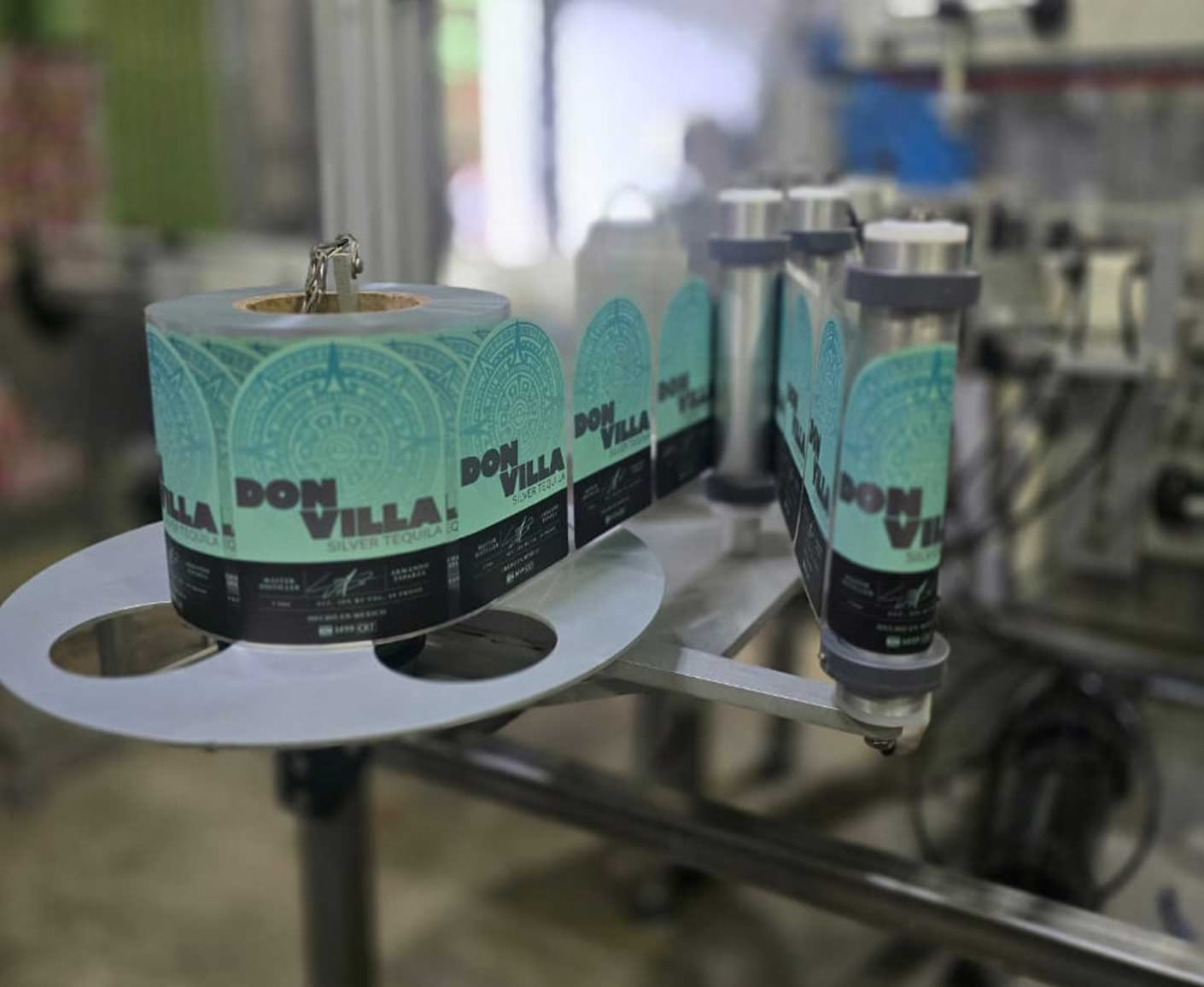
“Private label tequila is a model in which a company develops its own brand while production is carried out by an authorized manufacturer in Mexico, in compliance with NOM and CRT standards.”
The Most Common Mistake: Branding vs. Production
One of the biggest mistakes brands make is assuming that, once the brand has been created, the hard part is over.
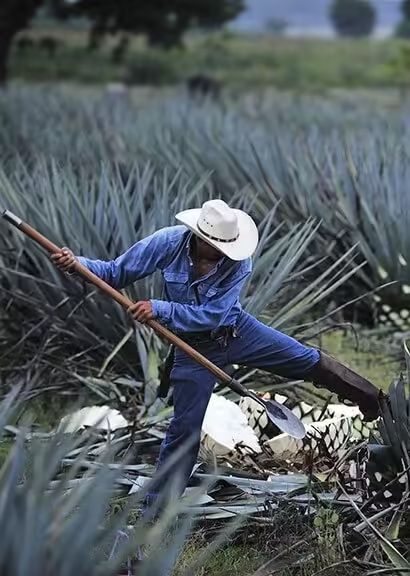
However, in reality, the brand is just the tip of the iceberg. Behind every bottle of tequila lies a complex operational structure that includes:
- Agricultural planning
- Production scheduling
- Regulatory compliance
- Quality control
- Export logistics
In fact, without these elements properly aligned, even the strongest brand concept will struggle to reach the market.
-
Private label tequila is a production system
-
In this sense, a successful private label tequila project requires structured execution across multiple stages:
- Compliance with NOM and CRT: Tequila production in Mexico is regulated. Without proper certification and documentation, products cannot be legally produced or exported.
- Batch traceability: Each production batch must be documented and traceable, ensuring consistency and regulatory transparency.
- Laboratory validation: Quality, alcohol content, and regulatory compliance must be verified through controlled testing.
Planning - Production Planning: Capacity must be scheduled months in advance. Reliable manufacturers do not operate reactively.
- Export Coordination: Shipping tequila to the United States involves regulatory, logistical, and documentation processes that must be coordinated in advance.
For this reason, successful projects do not improvise: they plan.
At Casa Esparza, planning is part of our operational DNA. Every private label project is built on traceability, clear technical criteria, and decisions aligned with the requirements of the tequila industry and the objectives of each brand.
How to Do It Right
In contrast, successful brands take a different approach to private-label tequila. They understand that it’s not just about launching a product onto the market, but about building a solid operation from the ground up. That’s why they make strategic decisions early on, aligning every element of the process before production begins. They:
-
- Plan production cycles in advance
- Work with well-structured manufacturers
- Ensure regulatory compliance from the start
- Understand export requirements
- Treat the process as an operation, not a transaction
From reaction to strategy
Furthermore, this approach not only reduces errors but also enables informed decision-making at every stage of brand development. Consequently, instead of reacting to problems, these brands build systems that prevent them. They don’t improvise. They execute.
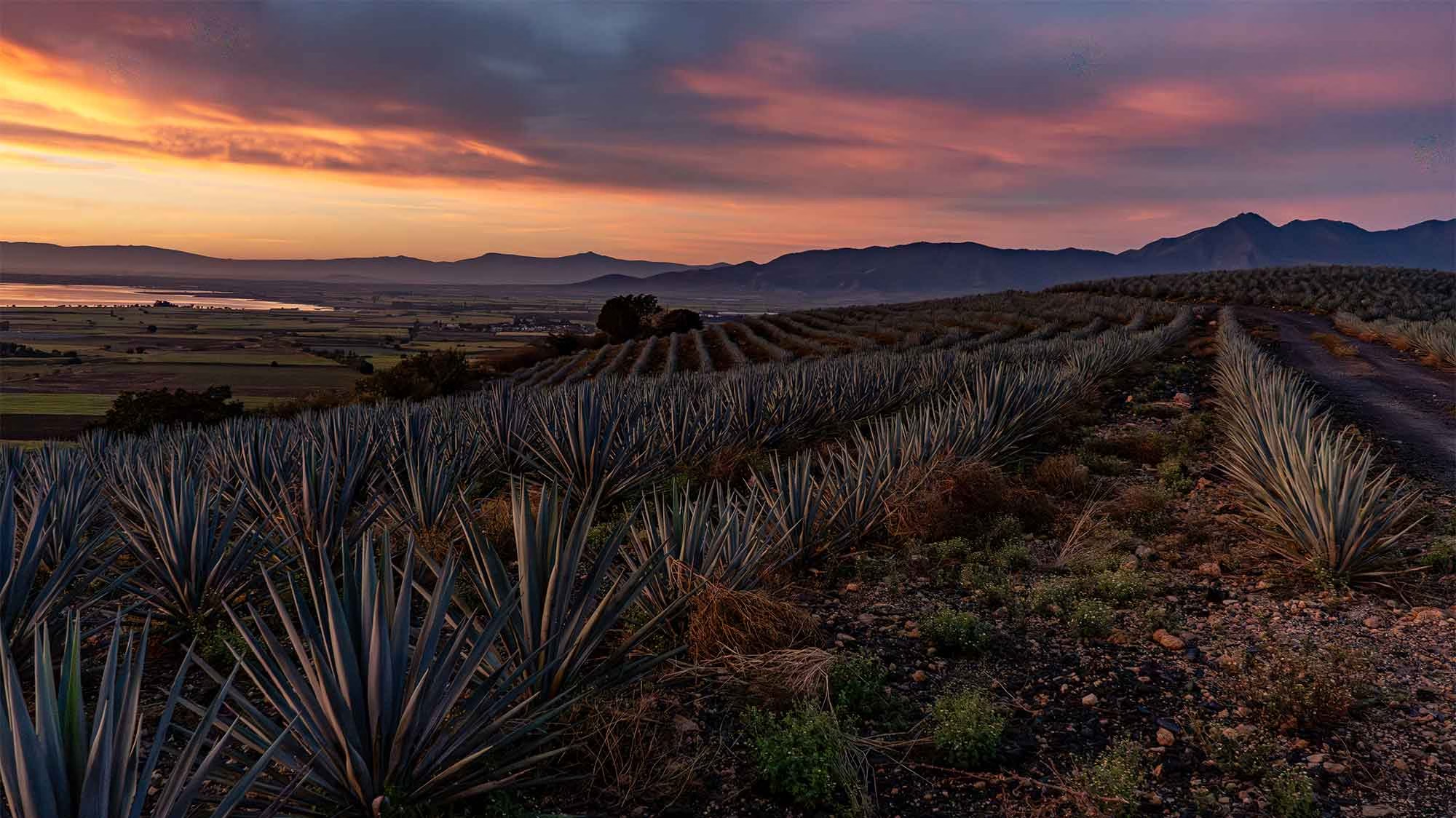
From Mexico to the U.S.: Structure Determines Scalability
Furthermore, for brands targeting the U.S. market, execution becomes even more critical. It’s not enough to produce a good tequila; you must ensure that the product can leave Mexico, comply with international regulations, and maintain consistency at scale. Export-ready tequila requires:
-
- Regulatory compliance
- Accurate documentation
- Logistical coordination
- Consistent production quality
Risks of poor execution
When these elements are not properly integrated, growth becomes unstable. This results in delays, inconsistencies, and operational limitations that hinder expansion.
Therefore, without structure, scaling becomes impossible.
At Casa Esparza, we understand that the value of tequila lies not only in its origin but in its ability to successfully reach new markets. That is why we combine the Mexican heritage of the process with execution aligned with the current demands of the international market, facilitating the development of brands seeking to grow in the United States and other destinations.
The Value of Process Over Haste
In the tequila industry, solid projects are recognized over time. Not necessarily for their immediate visibility, but for their consistency, operational coherence, and ability to sustain themselves in the market.
In reality, the brands that endure are not the ones launched the fastest, but the ones built the best.
-
- Quality cannot be improvised.
- A brand cannot be rushed.
- Prestige is crafted.
Each of these statements reflects an operational reality: well-executed processes require time, coordination, and strategic clarity. Attempting to cut corners in critical stages often generates hidden costs that manifest later in the form of errors, rework, or loss of credibility.
THE TRUE INVESTMENT
In this sense, investing time in properly structuring a project from the outset allows for optimizing resources, anticipating risks, and making decisions with greater certainty. More importantly, it lays the foundation for building a brand that not only reaches the market but can sustain itself, adapt, and grow over time.
In this context, speed is not a competitive advantage. Structure is.
Execution Defines the Brand
Launching a private-label tequila brand is not just a creative decision, but also an operational one. As we have seen, the difference between a successful tequila project and a delayed or inconsistent launch rarely lies in the brand itself. It lies in the execution behind it.
In particular, from compliance with NOM standards and production planning to batch traceability, laboratory validation, and export coordination, every stage requires structure, coordination, and foresight. For companies seeking a reliable tequila manufacturer in Mexico, understanding this process is not optional—it is essential.
In this context, this article does not aim to simplify the process, but to clarify it. Because in the tequila industry, the brands that succeed are not the ones that move the fastest, but the ones that plan the best.
Keep discovering with Casa Esparza
In upcoming articles, we will continue to break down key topics such as:
-
- How to export tequila to the United States
- Regulatory requirements (NOM, CRT, FDA, TTB)
- Production timelines and capacity planning
- How to choose the right partner for private label tequila
At Casa Esparza we believe that structured execution is what turns an idea into a scalable tequila brand.

Download our free resource for importers
As part of the planning process, one of the first operational requirements is the Certificate of Export Authenticity (CAE). We’ve put together a practical guide outlining the 3 essential steps to obtain it:
“The 3 Essential Steps to Obtaining the CAE”
A clear and straightforward document to help you understand one of the key elements of the export process.
Ideal for:
• Importers
• Distributors
• Private label brands
• Professionals who need clarity on the regulatory process
👉 Click to request it via WhatsApp and receive it directly on your device.